
ENGINEERING THE COMPLETE TOOL
Every component
changes the experience.
A shaft, head and handle form an assembly. Evaluate how they work together in the task.
MATERIAL CHOICE
Why PSC specifies fibreglass shafts.
PSC has moved its push/pull shaft platform to fibreglass, with plastic-jacketed construction for premium configurations.
Fibreglass offers a corrosion-resistant shaft platform and avoids the permanent bending behaviour associated with metal tubes. Performance still depends on the section, fibre construction, connection design and tool length.
A plastic jacket provides a protective outer surface. Inspect it for cuts, wear and damage that may conceal or expose the underlying shaft. A jacket does not make a damaged shaft serviceable.
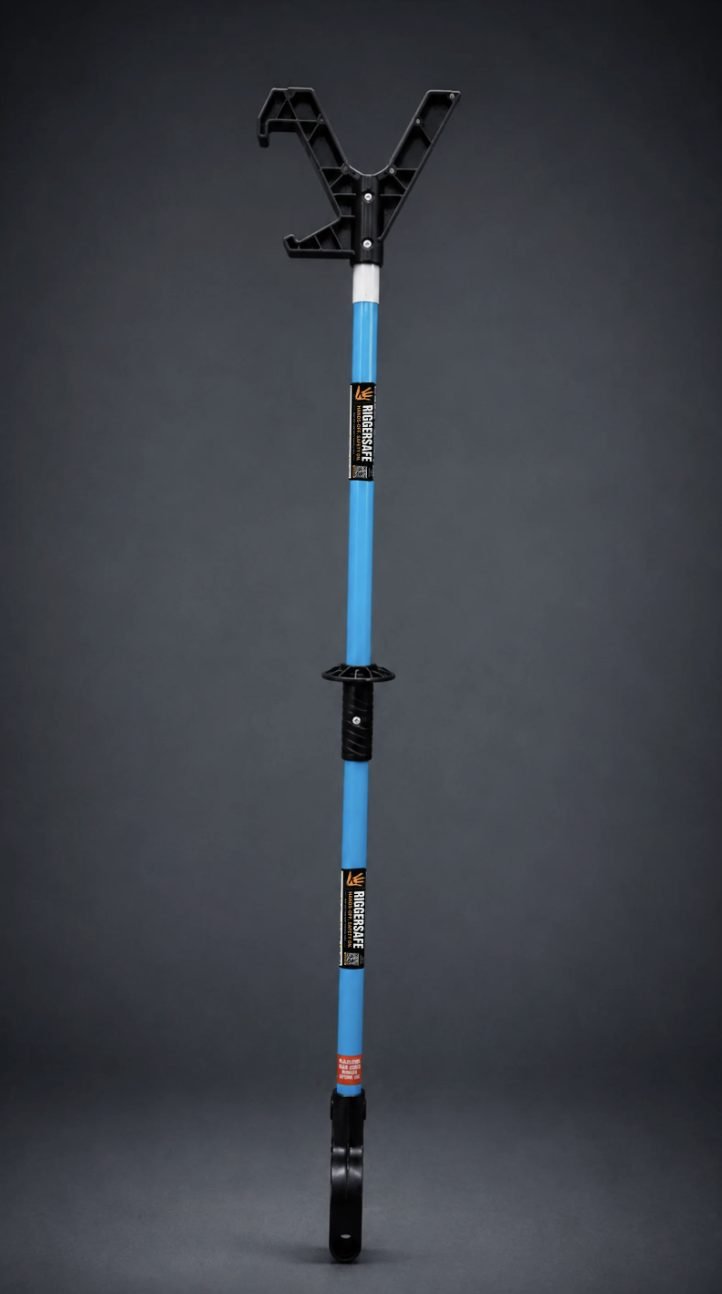
| Consideration | Fibreglass shaft | Aluminium shaft |
|---|---|---|
| Material behaviour | Composite; inspect for cracking, splitting and exposed fibres. | Metal; inspect for dents, bending and connection damage. |
| Corrosion | Shaft does not rust; check metallic fittings separately. | Alloy and environment determine corrosion behaviour. |
| Handling | Section, length, finish and grips determine feel. | Section and length also determine weight and stiffness. |
| Electrical use | No electrical rating implied by shaft material. | Conductive metal; assess electrical exposure. |
| Acceptance | Evaluate the tested complete assembly. | Evaluate the tested complete assembly. |
COMPONENT DETAIL
The small parts are part of the specification.
| Component | Why it matters |
|---|---|
| Head geometry | Sets contact, engagement direction and release. |
| Head insert | Changes friction, wear and surface marking. |
| Shaft connection | Transfers force; looseness can compromise control. |
| D-handle | Opening and grip should suit gloves and wrist posture. |
| Mid-grips / buffers | Support hand placement and contact management where fitted; confirm their intended function. |
| Jacket | Protects the exterior; inspect for cuts and wear. |
| Identification | Connects the supplied model to instructions and documentation. |
CONTACT OPTIONS
Choose the insert around the surface.
Aluminium contact variants can suit more aggressive contact where surface marking is acceptable. Rubber and plastic/Teflon variants serve different friction and surface-protection requirements. Confirm material compatibility and temperature limits for the exact assembly.
These are distinct variants in the published fibreglass family guide. They are not automatically replaceable or interchangeable.