Push Pull Safety Stick for Hands-Free Load Control
Most hand injuries during load handling don't happen because workers are careless. They happen because the job demands it — steadying a swinging load, guiding a pipe into position, or stopping a suspended beam from rotating. In those final few inches, hands go where they shouldn't. Steer-it is a purpose-built push pull safety tool that helps industrial teams create that critical distance — between the hand and the hazard.
Why Hands Still Enter the Danger Zone During Load Handling
Even with gloves, inductions, and lift plans in place
Load handling procedures are often thorough on paper. Trained riggers, reviewed lift plans, crane operators following signals — and yet, injuries still happen during the final stage of positioning. This isn't a failure of planning. It's a consequence of how physical work actually unfolds.
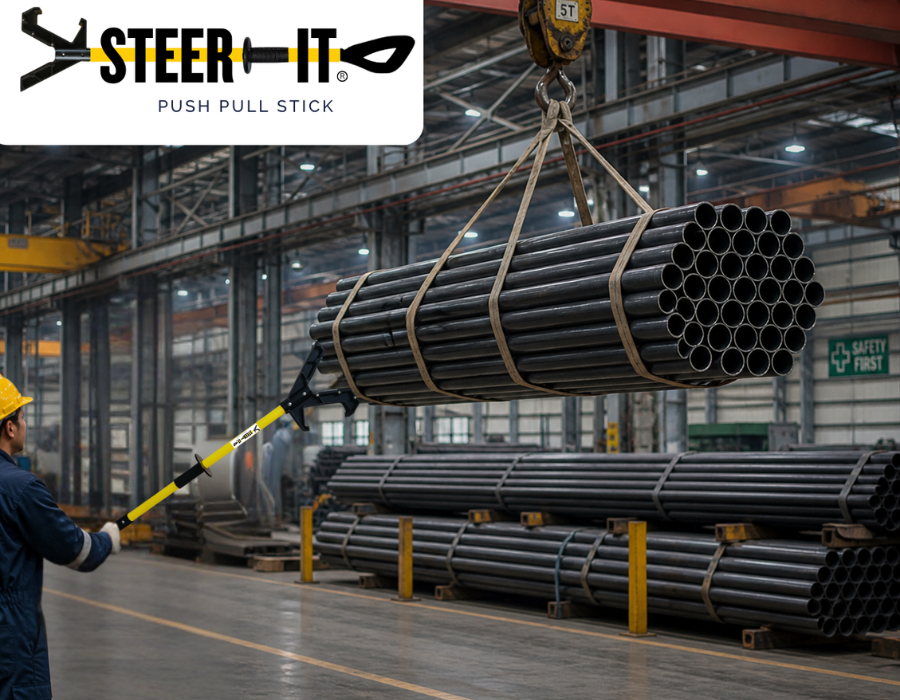
When a suspended load drifts toward a structure, the natural human response is to reach out and push it back. When a pipe is being guided into a flange, someone puts a hand on it to steer it into alignment. When a beam is being lowered, hands are used to stop it from spinning or catching.
These are not reckless acts. They are instinctive, skilled responses to real handling challenges. The problem is that none of these situations come with warning.
Common exposure points:
- Pinch points between load and landing surface
- Crush zones as loads are lowered onto supports
- Caught-between hazards near moving equipment
- Swinging suspended loads on crane hooks
- Pipe and beam alignment into position
- Crane load positioning in congested areas
- Awkward reach into confined or overhead spaces
- Manual guiding habits from years of practice
What Is a Push Pull Safety Stick?
An engineered distance tool for industrial load handling
A push pull safety stick is a rigid, handheld tool that allows a worker to push, pull, steer, guide, or position a load without placing their hands in direct contact with it. The tool creates physical distance between the operator and the load interface — reducing exposure to pinch points, crush zones, and caught-between hazards.
Unlike improvised alternatives — a length of pipe, a scaffold tube, or a wooden handle — a purpose-built push pull stick is designed with the right head geometry, grip, and shaft length for the task. It is not a rigging accessory. It does not lift or suspend loads. It helps workers control, guide, and position them safely.
Typical uses include:
- Pushing a suspended load away from the body or a structure
- Guiding a pipe into a flange or connection point
- Keeping distance from a swinging load during a lift
- Aligning structural steel in a fabrication yard
- Reaching into areas where hands should not go
- Steering components during machine assembly
A push pull safety stick is not a tagline. Taglines control swing and orientation from a distance. Push pull tools assist with closer, hands-on positioning tasks where greater control is needed — but without direct hand contact.
In many lift operations, both tools are used together. Neither replaces the need for a proper lifting plan.
Steer-it: A Practical Push Pull Tool for Industrial Load Control
By TechMRO Inc. · pushpulltools.com
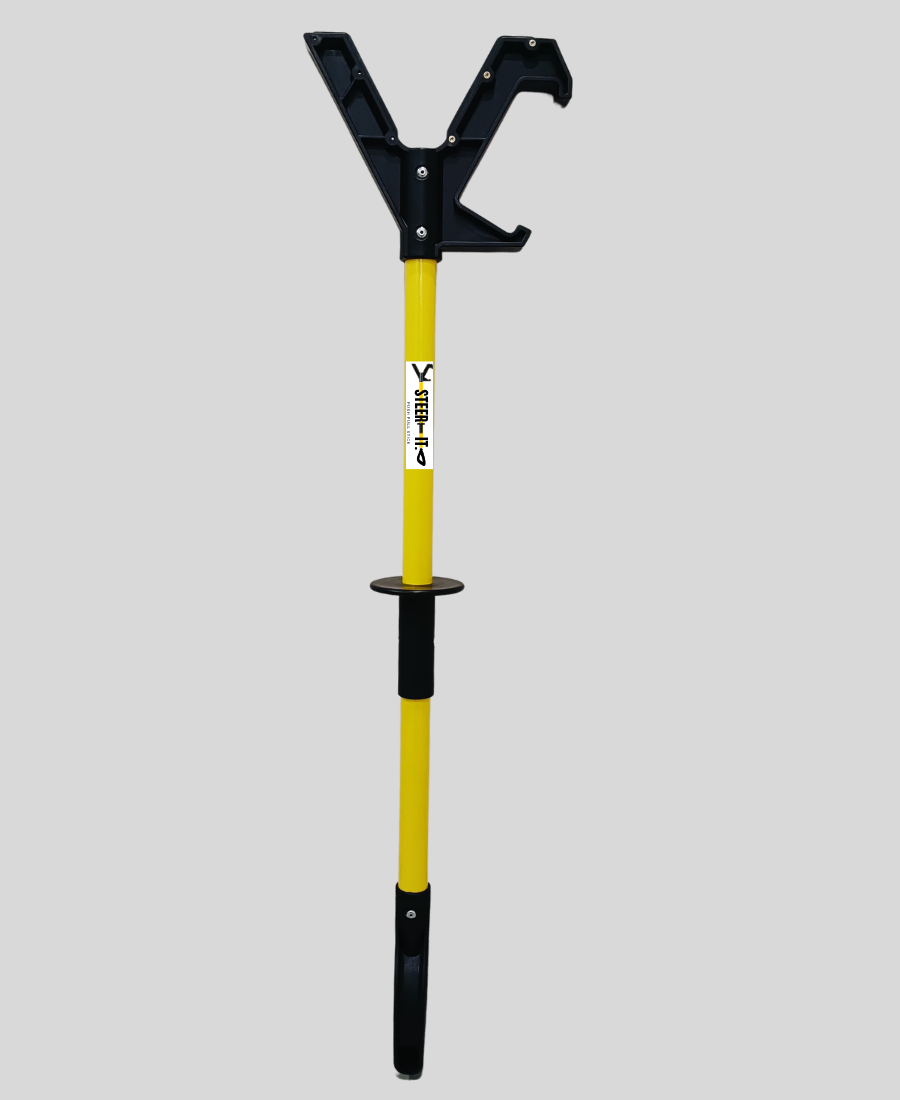
Steer-it is a simple, rugged, practical push pull safety stick built for real industrial conditions. It is not complex equipment. It has no moving parts, no power source, and no maintenance schedule beyond basic inspection. What it does provide is a reliable, fit-for-purpose tool for workers who need to keep their hands away from the load interface.
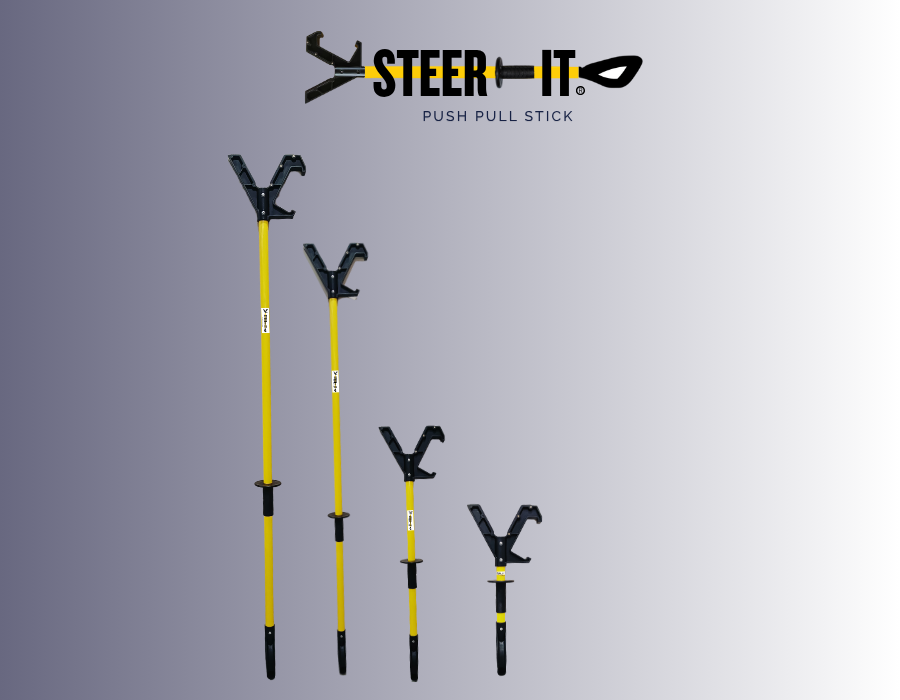
It is available in five lengths to match different working conditions, built from a fiberglass shaft for durability and non-conductivity, and finished in high-visibility yellow so it is easy to locate in busy site environments.
Fiberglass Shaft
Non-conductive, corrosion-resistant, and lightweight. The fiberglass construction makes Steer-it suitable for use near electrical equipment and in harsh or outdoor environments where steel tools would corrode or conduct electricity.
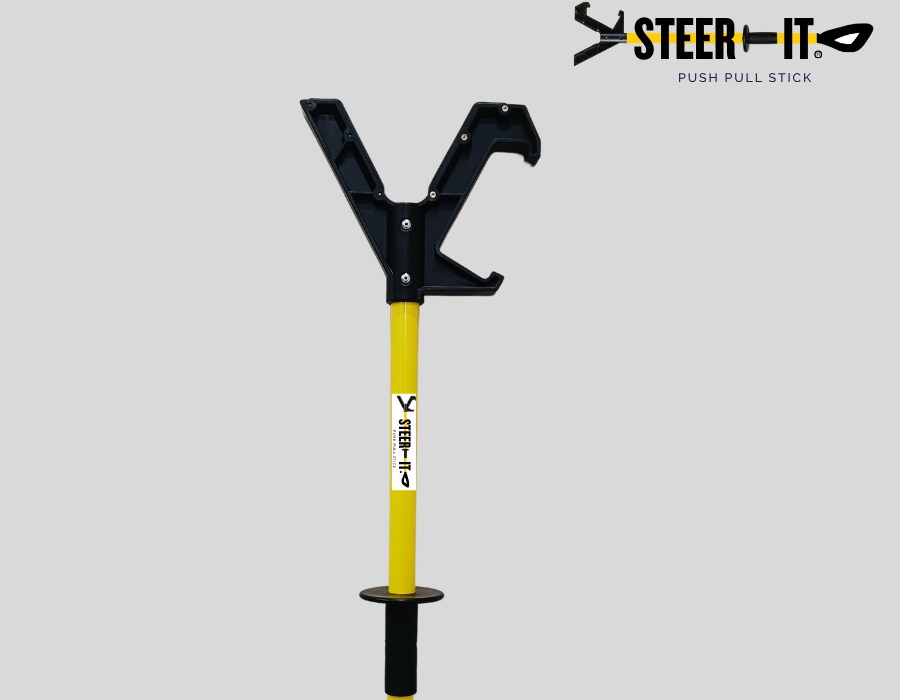
Wide Push/Pull Head
The wide contact head distributes force across the load surface, improving control on irregular shapes like pipes, beams, panels, and crates. A wider head reduces slippage and gives the operator more stable contact with the load.
Ergonomic D-Handle
The D-handle provides a secure, comfortable grip for sustained use. It supports better control during push and pull operations and reduces operator fatigue during extended handling tasks.
Safety Hand Guard
The hand guard is positioned between the grip and the working end to help prevent the hand from slipping toward the load interface during push operations — a practical protection feature in dynamic or fast-moving handling situations.
High-Visibility Yellow Finish
The bright yellow finish makes Steer-it easy to locate on busy sites, in low-light environments, and during outdoor operations. Visibility matters when tools are shared, stored, or need to be found quickly during a lift.
Low-Maintenance Construction
Resistant to chemicals, moisture, and weather. Steer-it does not require regular lubrication or mechanical servicing. Inspect before each use, clean as needed, and replace if the shaft or head shows damage.
Technical Specifications
Product details buyers and search engines expect on a commercial product page
| Product Name | Steer-it Push Pull Safety Stick |
| Product Type | Industrial push pull tool / hands-free load control tool |
| Material | Fiberglass / FRP shaft |
| Electrical Property | Non-conductive fiberglass construction |
| Handle | Ergonomic D-handle with safety hand guard |
| Head | Wide push/pull contact head for load control |
| Available Lengths | 21 inch, 42 inch, 50 inch, 72 inch and 96 inch |
| Color | High-visibility yellow |
| Primary Use | Suspended load control, pipe positioning, crane load guiding, fabrication and rigging support |
How to Choose the Right Push Pull Tool Length
Length affects standoff distance, force transfer, and operator control
Choosing the right length is not simply a matter of "longer is safer." Longer tools require more physical effort to control, can be difficult to manage in confined areas, and may reduce precision during fine positioning. The right length is the one that provides adequate standoff distance while maintaining operator control and comfort.
| Length | Best Suited For | Typical Applications |
|---|---|---|
| 21" | Close-range, benchtop, confined tasks | Maintenance, machine assembly, workshop positioning, restricted access areas |
| 42" | General plant use, medium standoff | Pipe handling, machine maintenance, fabrication, valve positioning |
| 50" | General industrial, versatile | Fabrication yards, structural assembly, panel and plate guiding |
| 72" | Larger standoff, outdoor, elevated | Crane-handled loads, offshore decks, construction lifting, wind energy |
| 96" | Maximum standoff, large loads | Suspended loads, major lifts, shipbuilding panels, heavy engineering |
Applications by Industry
Where push pull safety sticks support hands-free load handling
Tagline vs Push Pull Tool: When Do You Need Each?
Two different tools — two different roles in load control
Tagline
- Controls swing and orientation during a lift
- Operates from a longer standoff distance
- Best for guiding loads as they travel through air
- Reduces the need for workers to be near the load
- Standard rigging accessory — procedurally controlled
Push Pull Safety Stick
- Assists with close-range positioning, steering & alignment
- Used during the final stage of load placement
- Helps keep hands away from the load interface
- Useful for fine-positioning where a tagline lacks precision
- Supports hands-free handling at the point of placement
In many lifting operations, both tools are appropriate — and used together. The tagline manages load swing during travel; the push pull tool assists at the point of landing and positioning. Neither replaces a proper lifting plan, trained rigging personnel, or crane operator control.
What Steer-it Does Not Replace
It is a supporting tool, not a substitute for safe systems of work
Steer-it helps reduce unnecessary hand contact during load handling. It is one element of a safe operation, not a replacement for the systems and procedures that make lifting work safe.
Push Pull Tool vs Improvised Methods
Why a purpose-built industrial push pull tool is better than makeshift handling
| Method | Main Risk | Best SEO / Safety Message |
|---|---|---|
| Bare Hands | Direct exposure to pinch points, crush zones and load movement | Hands should not be the control system for moving loads. |
| Pipe / Scaffold Tube | Slippage, poor grip, no hand guard and inconsistent control | Improvised tools are not designed for load guiding. |
| Wooden Pole | Breakage, splinters, low durability and poor contact geometry | Low-cost substitutes can create new handling risks. |
| Steer-it Push Pull Safety Stick | Purpose-built distance tool for safer load control | Designed for hands-free load control and no-touch load handling. |
Before and After Steer-it
The difference a purpose-built distance tool makes in practice
- Workers steady loads by hand instinctively
- Hands reach into pinch zones during final positioning
- Workers lean into the load path to guide or align
- Improvised tools used — scaffold tubes, wooden poles
- No purpose-built tool within reach during a lift
- Workers use a purpose-built stick to maintain distance
- Hands stay clear of the load interface during placement
- Wide head provides stable contact without direct grip
- Tool is designed for the task — no improvisation needed
- Site teams have a consistent, reliable load handling tool
Frequently Asked Questions
Common questions about push pull safety sticks and Steer-it
Request a Quote for Steer-it
Request pricing, product details, length recommendations, or distributor information for Steer-it push pull safety sticks.
Typical Buyer Evaluation Points
Use real testimonials here only after collecting verified customer feedback
Helps teams evaluate final positioning tasks where workers need control without placing hands on the load.
Use Case · Rigging and Oil & GasHigh-visibility finish and multiple lengths support standardization across fabrication yards and industrial sites.
Use Case · Fabrication YardsDesigned for reducing direct contact around pipes, beams, suspended components and load interfaces.
Use Case · Industrial MaintenanceLooking for a push pull safety stick for your site?
Contact TechMRO Inc. for product details, pricing, length selection guidance, and distributor enquiries. We'll help you choose the right tool for your application.
Dabagardens, Visakhapatnam
Andhra Pradesh 530020, India